THE WOLF (Canis Lupus)
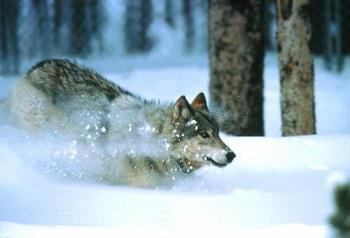
(NPS Photo)
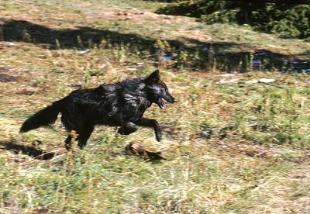
(NPS Photo)
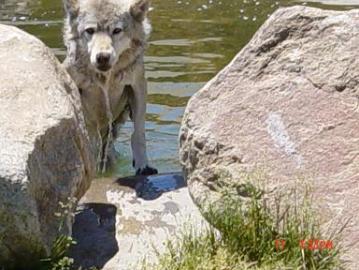
(Photo by T.A. Roe)
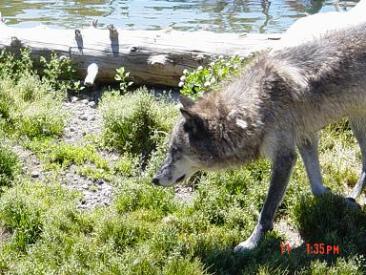
(Photo by T.A. Roe)
When we think of the wolf, canis lupus, we typically think about
the timber wolf, or gray wolf. The rare red wolf (canis rufus) and
Mexican wolf (canis lupus baileyi) are the other two North
American wolf subspecies.
the timber wolf, or gray wolf. The rare red wolf (canis rufus) and
Mexican wolf (canis lupus baileyi) are the other two North
American wolf subspecies.
Wolves are intensely family-oriented creatures, living in tight-knit packs of up to thirty members. The alpha male and alpha
female are typically the only pair in the pack to produce offspring. They are the designated leaders of the pack, and keep their
subordinates in line. Alphas often have to defend their high-rank in the occasional squabble with a haughty young wolf, and
the latter is usually put in his place. While alphas often appear to "beat up" on their subordinates, their actions are rarely
painful to the underlings, known as betas. Rather, the alpha is reinforcing submissive behavior with the occasional display of
what we would call aggression. The omega is the unfortunate straggler that takes the brunt of the pack's frustration and
aggression. The omega survives by picking the bones of the pack's kills. It's interesting to note that despite the treatment they
receive, omegas would rather stay within the pack than go off on their own. And in times of high stress, such as relocation by
humans, an alpha has been seen "coaxing" his omega out of a crate.
The alphas always seem to stand a little taller than the rest of the wolves in a pack, with heads held high, tails relaxed, and
ears erect. Betas, when around their pack leaders, tend to have a slouched posture with their ears back and their tails
between their legs. Some demonstrate behavior similar to that of pups begging for food, and even our own domesticated
dogs retain the habit of licking the alpha's muzzle, a sign of subordination in adults. Pups do this to coax older members of the
pack to regurgitate food for them.
Though the alpha male and female are the only breeding pair within the pack, all members of the pack assist in caring for the
pups by feeding them and protecting them. As well as caring for the pups, all wolves in the pack assist in the hunt of big game,
such as moose or elk. Betas can often be seen mimicking the hunting tactics used by the alphas, even if such actions are not
as efficient in hunting.
Of course, wolves are also scavengers and will gladly eat carrion if they find it.
female are typically the only pair in the pack to produce offspring. They are the designated leaders of the pack, and keep their
subordinates in line. Alphas often have to defend their high-rank in the occasional squabble with a haughty young wolf, and
the latter is usually put in his place. While alphas often appear to "beat up" on their subordinates, their actions are rarely
painful to the underlings, known as betas. Rather, the alpha is reinforcing submissive behavior with the occasional display of
what we would call aggression. The omega is the unfortunate straggler that takes the brunt of the pack's frustration and
aggression. The omega survives by picking the bones of the pack's kills. It's interesting to note that despite the treatment they
receive, omegas would rather stay within the pack than go off on their own. And in times of high stress, such as relocation by
humans, an alpha has been seen "coaxing" his omega out of a crate.
The alphas always seem to stand a little taller than the rest of the wolves in a pack, with heads held high, tails relaxed, and
ears erect. Betas, when around their pack leaders, tend to have a slouched posture with their ears back and their tails
between their legs. Some demonstrate behavior similar to that of pups begging for food, and even our own domesticated
dogs retain the habit of licking the alpha's muzzle, a sign of subordination in adults. Pups do this to coax older members of the
pack to regurgitate food for them.
Though the alpha male and female are the only breeding pair within the pack, all members of the pack assist in caring for the
pups by feeding them and protecting them. As well as caring for the pups, all wolves in the pack assist in the hunt of big game,
such as moose or elk. Betas can often be seen mimicking the hunting tactics used by the alphas, even if such actions are not
as efficient in hunting.
Of course, wolves are also scavengers and will gladly eat carrion if they find it.
The wolf's howl had been said to be a haunting sound. In reality, it's quite a lovely sound. People tend to fear a wolf's howl
because they fear the wolf itself.
Howling a form of mass-communication among the pack, and all pack members will join in if they can. They howl when they
wake up, before they hunt, when they travel, and when they're ready to sleep. Wolves seem to enjoy howling. Even pups display
the ability to howl at only a few weeks old.
because they fear the wolf itself.
Howling a form of mass-communication among the pack, and all pack members will join in if they can. They howl when they
wake up, before they hunt, when they travel, and when they're ready to sleep. Wolves seem to enjoy howling. Even pups display
the ability to howl at only a few weeks old.

Photo courtesy US Fish & Wildlife Service
Somehow, the gruesome repertoire of the Big Bad Wolf thrives in the modern world. If we don't portray them a vicious baby-eating
plague upon the land (as some farmers seem to believe), then we're enthralled with the image of werewolves in today's horror movies
and books.
As interesting as this all sounds, these images have given us the wrong impression about this amazing creature, and sadly, because
of it, the wolf has paid dearly.
While mankind is doing its best to wipe the wolf off the face of the planet (massive wolf-kills are constantly in progress in Alaska
and Canada), the wolf tries to retreat further and further from us. Wolves do not make an effort to be in our company (I don't blame
them), and prefer territory far from human settlements.
When I was in grade school, a man came to an assembly to teach us about wolves, bringing his own wolf. Along with the wolf, he
also showed us a collection of films that hunters had taken, in which they shoot down and skin countless wolves. That was years agoâ
€¦ and those images are still burned in my head. Since then I've learned more and more that our attitude toward wolves is grossly unfair.
Just recently, I viewed a documentary on the return of the Mexican wolf to the southwestern states. Within this documentary, there
was a clip of the reintroduction committee proposing their plans to a farming community. One angry farmer stood up and said that he'd
hold the committee responsible if one of the wolves ended up killing a child of theirs. I wish I could have been there to shoot that guy.
To date, there have been no human deaths from wolves and wolf-related injuries are so rare as not to exist. You can quote me
on that. Look it up in any wildlife book or ask any expert. It's there in plain text, and biologists will tell you it's true. Injuries from
wolves are due either to disease in the animal or to human stupidity (an elk-hunter doused himself in elk urine and was ambushed by a
lone wolf. The wolf, realizing its mistake, fled immediately). Rabies, a disease known to make animals (and people) aggressive, is
actually less common in wolves, but found in vast amounts of foxes, raccoons, bats, and skunks.
plague upon the land (as some farmers seem to believe), then we're enthralled with the image of werewolves in today's horror movies
and books.
As interesting as this all sounds, these images have given us the wrong impression about this amazing creature, and sadly, because
of it, the wolf has paid dearly.
While mankind is doing its best to wipe the wolf off the face of the planet (massive wolf-kills are constantly in progress in Alaska
and Canada), the wolf tries to retreat further and further from us. Wolves do not make an effort to be in our company (I don't blame
them), and prefer territory far from human settlements.
When I was in grade school, a man came to an assembly to teach us about wolves, bringing his own wolf. Along with the wolf, he
also showed us a collection of films that hunters had taken, in which they shoot down and skin countless wolves. That was years agoâ
€¦ and those images are still burned in my head. Since then I've learned more and more that our attitude toward wolves is grossly unfair.
Just recently, I viewed a documentary on the return of the Mexican wolf to the southwestern states. Within this documentary, there
was a clip of the reintroduction committee proposing their plans to a farming community. One angry farmer stood up and said that he'd
hold the committee responsible if one of the wolves ended up killing a child of theirs. I wish I could have been there to shoot that guy.
To date, there have been no human deaths from wolves and wolf-related injuries are so rare as not to exist. You can quote me
on that. Look it up in any wildlife book or ask any expert. It's there in plain text, and biologists will tell you it's true. Injuries from
wolves are due either to disease in the animal or to human stupidity (an elk-hunter doused himself in elk urine and was ambushed by a
lone wolf. The wolf, realizing its mistake, fled immediately). Rabies, a disease known to make animals (and people) aggressive, is
actually less common in wolves, but found in vast amounts of foxes, raccoons, bats, and skunks.

Mexican wolf. US FWS Photo
The exception to human injuries from wolves is the dog/wolf crossbreed. The result
of a dog-wolf pairing is a canine that has all of the wolf's wild nature, but none of its
shyness. They tend to become temperamental with humans because they have no fear
of them. Aside from the examples given above, anyone claiming to have been
attacked by a wolf was probably attacked by a wolf-dog hybrid.
Some people are connived that having a wolf or half-wolf as a pet would be a fun
idea. Obviously, they lack a few brain cells. Wolves do not behave exactly like our
own domesticated dogs do, and lead miserable lives when forced to live in a house,
barn, or cage. That, and given a wolf's natural curiosity and need to get his nose into
everything, his owner might come home one day to a house that's been shredded.
Wolves dig, scratch at trees, scent-mark their territory, and roll around in carrion or
feces because they seem to like the smell. Nothing really keeps a hybrid from doing
these same things. It's not worth the trouble.
Also, people longing for an exotic pet, like a wolf hybrid, should be warned that not
many states actually permit the ownership these animals, and almost no city in the
nation does. (Colorado, for example, wolves and first generation hybrids require
owners to have special permits. This does not include urban areas like Denver or
Colorado Springs.) Most vets are not licensed to care for such animals, and could
lose their job if they try to care for them anyway. If you're caught with an illegal
animal, not only will you have to pay a fine, but your animal will be taken from you
and destroyed. It's not fair to the animal, so maybe people should consider adopting
from a shelter instead. Chances are, they'll enjoy the companionship of a fully
domesticated dog much more that of a wild animal.
Here are the states that don't require permits for wolf or hybrid ownership:
Alabama, Kansas, Maine, Mississippi, Nevada, Ohio, Oklahoma. That's it, and this
does not apply to the cities or counties- they all have varying laws.
of a dog-wolf pairing is a canine that has all of the wolf's wild nature, but none of its
shyness. They tend to become temperamental with humans because they have no fear
of them. Aside from the examples given above, anyone claiming to have been
attacked by a wolf was probably attacked by a wolf-dog hybrid.
Some people are connived that having a wolf or half-wolf as a pet would be a fun
idea. Obviously, they lack a few brain cells. Wolves do not behave exactly like our
own domesticated dogs do, and lead miserable lives when forced to live in a house,
barn, or cage. That, and given a wolf's natural curiosity and need to get his nose into
everything, his owner might come home one day to a house that's been shredded.
Wolves dig, scratch at trees, scent-mark their territory, and roll around in carrion or
feces because they seem to like the smell. Nothing really keeps a hybrid from doing
these same things. It's not worth the trouble.
Also, people longing for an exotic pet, like a wolf hybrid, should be warned that not
many states actually permit the ownership these animals, and almost no city in the
nation does. (Colorado, for example, wolves and first generation hybrids require
owners to have special permits. This does not include urban areas like Denver or
Colorado Springs.) Most vets are not licensed to care for such animals, and could
lose their job if they try to care for them anyway. If you're caught with an illegal
animal, not only will you have to pay a fine, but your animal will be taken from you
and destroyed. It's not fair to the animal, so maybe people should consider adopting
from a shelter instead. Chances are, they'll enjoy the companionship of a fully
domesticated dog much more that of a wild animal.
Here are the states that don't require permits for wolf or hybrid ownership:
Alabama, Kansas, Maine, Mississippi, Nevada, Ohio, Oklahoma. That's it, and this
does not apply to the cities or counties- they all have varying laws.
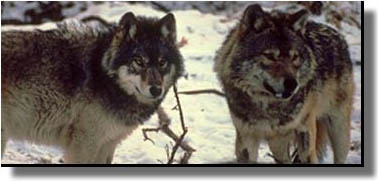
So why do wolves still kill livestock?
The simple answer is this- there's not much wilderness left
for the wolves to hunt in. We should actually consider this- the
wolf is not intruding on the farmer's territory, the farmer is
intruding on the wolf's territory. To make things worse, human
hunters take their toll on wild ungulates (deer, elk, moose,
mountain goats, etc) and leave wolves with little to hunt. Like
any sensible creature, the wolf is a determined survivor, and the
solution to its food problem lies in the livestock that is readily
available (farmers would do well to shelter their livestock at
night- it would make a significant difference). This seems to be
a particular problem around the Yellowstone National Park
area, where wolves have been recently reintroduced (they had
been killed off completely in the park by the 1950's due to a
government order). Farmers just outside of the park tend to
complain about livestock loss, though I would like to remind the
farmers that wolves aren't the only beasties after their sheep
and cattle.
The simple answer is this- there's not much wilderness left
for the wolves to hunt in. We should actually consider this- the
wolf is not intruding on the farmer's territory, the farmer is
intruding on the wolf's territory. To make things worse, human
hunters take their toll on wild ungulates (deer, elk, moose,
mountain goats, etc) and leave wolves with little to hunt. Like
any sensible creature, the wolf is a determined survivor, and the
solution to its food problem lies in the livestock that is readily
available (farmers would do well to shelter their livestock at
night- it would make a significant difference). This seems to be
a particular problem around the Yellowstone National Park
area, where wolves have been recently reintroduced (they had
been killed off completely in the park by the 1950's due to a
government order). Farmers just outside of the park tend to
complain about livestock loss, though I would like to remind the
farmers that wolves aren't the only beasties after their sheep
and cattle.
US FWS photo
Wolf-pelts are still quite a popular item in many countries, including the USA, and can sell for a pretty penny. A shop nearby my home
in Centennial, CO, sells wolf pelts for up to $500 each. That's a bit of money for a single pelt. The problem with wolf pelts is that the
wolves that once wore them were taken out of the wild population. There's really no such thing as a fur farm with wolves in it, as there
are fur farms for foxes, rabbits, coyotes, and minks. The fur trade is an issue that I usually don't bicker about, unless the fur in question
belongs to a wild threatened or endangered animal. Wolves are considered threatened in the lower 48 states.
in Centennial, CO, sells wolf pelts for up to $500 each. That's a bit of money for a single pelt. The problem with wolf pelts is that the
wolves that once wore them were taken out of the wild population. There's really no such thing as a fur farm with wolves in it, as there
are fur farms for foxes, rabbits, coyotes, and minks. The fur trade is an issue that I usually don't bicker about, unless the fur in question
belongs to a wild threatened or endangered animal. Wolves are considered threatened in the lower 48 states.
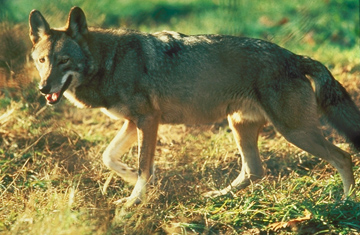
Red Wolf. US FWS photo

If wolves interest you:
Here are some of my favorite books on the subject-
Busch, Robert H. 1998. The Wolf Almanac. Connecticut: The Lyons Press.
Mech, L. David. 1991. The Way of the Wolf. Minnesota: Voyageur Press.
Coppard, Kit. 1999. Wolves. London: PRC Publishing Ltd.
Here are a few good wolf conservation and education centers-
Wolf Haven International
3111 Offut Lake Road
Tenino, WA 98589
Wolf Park
Battle Ground, IN 47920 (See pics of their resident wolves, foxes, and coyotes.)
Grizzly Discovery Center
West Yellowstone, MT (You can see more about GDC in the Yellowstone entry)
Wolf Photography by Monty Sloan
Here are some of my favorite books on the subject-
Busch, Robert H. 1998. The Wolf Almanac. Connecticut: The Lyons Press.
Mech, L. David. 1991. The Way of the Wolf. Minnesota: Voyageur Press.
Coppard, Kit. 1999. Wolves. London: PRC Publishing Ltd.
Here are a few good wolf conservation and education centers-
Wolf Haven International
3111 Offut Lake Road
Tenino, WA 98589
Wolf Park
Battle Ground, IN 47920 (See pics of their resident wolves, foxes, and coyotes.)
Grizzly Discovery Center
West Yellowstone, MT (You can see more about GDC in the Yellowstone entry)
Wolf Photography by Monty Sloan
US FWS photo
US Fish & Wildlife Service offers an array of public domain photos
here.
here.