THE HOPE DIAMOND
Like many well-known treasures, the Hope Diamond has a
long and intriguing history. It is even said to carry a curse, which
is one reason the Hope Diamond is so famous.
The Hope Diamond's story begins in Golconda, India...
long and intriguing history. It is even said to carry a curse, which
is one reason the Hope Diamond is so famous.
The Hope Diamond's story begins in Golconda, India...
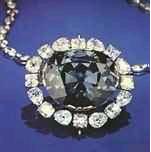
Originating in the Kollur mine, the large deep-blue diamond found its way into the possession of
French gem merchant, Jean Baptiste Tavernier between 1631-1668, who named it the "Tavernier
Blue". Some accounts suggest that Tavernier pilfered the diamond from the eye-socket of the Hindu
goddess Sita, which might explain the origins of its "curse." However, others argue that Tavernier was
a well-mannered gentlemen and it wouldn't be in his nature to steal from an Indian idol. Nonetheless,
there isn't any actual record of how Tavernier acquired the stone. At 112 carats, it is the world's
largest deep-blue diamond.
In 1668, Tavernier sold this precious stone to King Louis XIV of France. In just five years, the
Tavernier Blue is cut down to about 67 carats by the king's jeweler (Sieur Pitau) and re-named as
"The Blue Diamond of the Crown" or "The French Blue."
Almost a century after its acquisition by the French (1749), it is reset into a piece of royal
ceremonial jewelry for the Royal Order of the Golden Fleece, at the demand of Louis XV. In 1792,
the diamond is stolen along with other royal treasures in a raid of the palace during the French
Revolution.
It is said that the diamond made its way to Amsterdam, where it was recut by a jeweler named
Fals. This, of course, has not been confirmed but the story does say that Fals died a poor and broken
man, his own son committing suicide shortly after.
Two decades later, a large blue diamond weighing at about 46 carats is placed for sale in London
by its owner, Daniel Eliason. Given its size and unique blue color, it is speculated that the diamond
was cut from the French Blue.
Another decade later (1822), Sir Thomas Lawrence produces a painted portrait of George IV of
England, bearing the insignia of the Royal Order of the Golden Fleece set with a large blue stone that
appears to be a diamond. After George IV dies, his prize jewels are sold to cover the debt of his
estate.
At about 1839, a large blue diamond appears in a gem catalogue of Henry Philip Hope. Called the
"Hope Diamond", the catalogue offers no history of the stone. In 1841, the diamond is inherited by
Lord Hope's nephew, Henry Thomas Hope, who sells it to pay of his own debts. The new buyer of
the Hope Diamond was Simon Frankel, who kept the stone in his family safe for six years until he sold
it to Turkish Sultan Abdul Hamid II in 1908 for about $400,000. When the sultan had been
dethroned, the stone was quickly sought out and acquired by Evalyn Walsh McLean, a wealthy
American woman who fancied gemstones, having also bought the Star of the East, a 94.8 carat white
diamond. The Hope Diamond was bought from Pierre Cartier by the McLeans in 1911.
Evalyn Walsh McLean and her husband Ned had lived joyous lives as rich and glamorous
newlyweds, touring the world for their honeymoon. They lived in a mansion on Massachusetts Avenue
in Washington, D.C., and to the press they couldn't have been happier.
Of course, that was before the Hope Diamond came into their lives.
Evalyn claimed that she didn't believe rumors that the diamond was cursed, yet discouraged her
friends from touching it and never allowed her children to. She even arranged a ceremony in which a
priest came to her home and blessed the diamond. Unfortunately, the diamond's supposed curse
didn't waver. From 1913 to 1947, the McLean family and its close relatives and friends were met
with nothing but ill fortune.
Ned McLean's mother and her friend were two of the first people to handle the diamond after it
had been blessed, and within a year both women were dead, Ned's mother having died of
pneumonia. Evalyn and Ned's son, Vinson, was struck by an automobile and killed at age nine in
1919, and a decade later the once blissful marriage between Ned and Evalyn falls apart, as Ned's
drinking problem grew worse, and he supposedly became physically abusive to his wife. By 1933,
Ned McLean was found to be insane and was hospitalized. He died in a sanatorium in 1941. The
McLeans' daughter, Evalyn Reynolds, overdosed on sleeping pills in 1946, and Evalyn Walsh
McLean herself died a slow and painful death a year later, by falling and breaking her hip, and dying
of a sickness the she contracted while in the hospital for her injuries.
The Hope Diamond fell into the hands of New York jeweler Harry Winston, who did not believe in
the curse. In 1958, Winston placed the diamond of permanent loan to the Smithsonian Institution,
otherwise giving the diamond to the American public, in Washington, D.C. and one of Winston's
associates was quoted as saying: "If the hex is supposed to affect the owners, then the public will
share it."
Since then, the country has fared no better.
Notes: There are many variations of the Hope Diamond story. Some say that it landed in the possession of Catherine the Great of Russia, whose life of
woe and death by apolexy is blamed on her ownership of the diamond. I cannot find any source to confirm this as fact.
It should be noted that for a time the diamond was supposedly owned by Henry Thomas Hope's grandson, who married American acrtess May Yohe.
They both died in poverty, but May Yohe published a book about the Hope Diamond's past, titled The Mystery of the Hope Diamond.
Note that there is some confusion between Henry Thomas Hope and Henry Philip Hope. One source claims that Henry Thomas Hope was the
original owner of the diamond within his family, and that the diamond was named after him.
Warren G. Harding, the president of the United States, was a very close friend of the McLeans, and his death during his presidency as well as the
Teapot Dome Scandal that broke open shortly after were also blamed on the Hope Diamond.
You can see the Hope Diamond at the Smithsonian National Museum of Natural History in Washington, D.C, in the Harry Winston Room in the
Hall of Geology, Gems and Minerals.
BIBLIOGRAPHY-
1. Alexander, John. Ghosts: Washington's Most Famous Ghost Stories. Washington, D.C.: The Washington Book Trading Company, 1988.
2. McLean, E.W., & Sparkes, B. Father Struck it Rich. New York: Reprinted by Arno press, 1936.
3. Post, J.E. The National Gem Collection. New York: Harry Abrahams, 1997.
French gem merchant, Jean Baptiste Tavernier between 1631-1668, who named it the "Tavernier
Blue". Some accounts suggest that Tavernier pilfered the diamond from the eye-socket of the Hindu
goddess Sita, which might explain the origins of its "curse." However, others argue that Tavernier was
a well-mannered gentlemen and it wouldn't be in his nature to steal from an Indian idol. Nonetheless,
there isn't any actual record of how Tavernier acquired the stone. At 112 carats, it is the world's
largest deep-blue diamond.
In 1668, Tavernier sold this precious stone to King Louis XIV of France. In just five years, the
Tavernier Blue is cut down to about 67 carats by the king's jeweler (Sieur Pitau) and re-named as
"The Blue Diamond of the Crown" or "The French Blue."
Almost a century after its acquisition by the French (1749), it is reset into a piece of royal
ceremonial jewelry for the Royal Order of the Golden Fleece, at the demand of Louis XV. In 1792,
the diamond is stolen along with other royal treasures in a raid of the palace during the French
Revolution.
It is said that the diamond made its way to Amsterdam, where it was recut by a jeweler named
Fals. This, of course, has not been confirmed but the story does say that Fals died a poor and broken
man, his own son committing suicide shortly after.
Two decades later, a large blue diamond weighing at about 46 carats is placed for sale in London
by its owner, Daniel Eliason. Given its size and unique blue color, it is speculated that the diamond
was cut from the French Blue.
Another decade later (1822), Sir Thomas Lawrence produces a painted portrait of George IV of
England, bearing the insignia of the Royal Order of the Golden Fleece set with a large blue stone that
appears to be a diamond. After George IV dies, his prize jewels are sold to cover the debt of his
estate.
At about 1839, a large blue diamond appears in a gem catalogue of Henry Philip Hope. Called the
"Hope Diamond", the catalogue offers no history of the stone. In 1841, the diamond is inherited by
Lord Hope's nephew, Henry Thomas Hope, who sells it to pay of his own debts. The new buyer of
the Hope Diamond was Simon Frankel, who kept the stone in his family safe for six years until he sold
it to Turkish Sultan Abdul Hamid II in 1908 for about $400,000. When the sultan had been
dethroned, the stone was quickly sought out and acquired by Evalyn Walsh McLean, a wealthy
American woman who fancied gemstones, having also bought the Star of the East, a 94.8 carat white
diamond. The Hope Diamond was bought from Pierre Cartier by the McLeans in 1911.
Evalyn Walsh McLean and her husband Ned had lived joyous lives as rich and glamorous
newlyweds, touring the world for their honeymoon. They lived in a mansion on Massachusetts Avenue
in Washington, D.C., and to the press they couldn't have been happier.
Of course, that was before the Hope Diamond came into their lives.
Evalyn claimed that she didn't believe rumors that the diamond was cursed, yet discouraged her
friends from touching it and never allowed her children to. She even arranged a ceremony in which a
priest came to her home and blessed the diamond. Unfortunately, the diamond's supposed curse
didn't waver. From 1913 to 1947, the McLean family and its close relatives and friends were met
with nothing but ill fortune.
Ned McLean's mother and her friend were two of the first people to handle the diamond after it
had been blessed, and within a year both women were dead, Ned's mother having died of
pneumonia. Evalyn and Ned's son, Vinson, was struck by an automobile and killed at age nine in
1919, and a decade later the once blissful marriage between Ned and Evalyn falls apart, as Ned's
drinking problem grew worse, and he supposedly became physically abusive to his wife. By 1933,
Ned McLean was found to be insane and was hospitalized. He died in a sanatorium in 1941. The
McLeans' daughter, Evalyn Reynolds, overdosed on sleeping pills in 1946, and Evalyn Walsh
McLean herself died a slow and painful death a year later, by falling and breaking her hip, and dying
of a sickness the she contracted while in the hospital for her injuries.
The Hope Diamond fell into the hands of New York jeweler Harry Winston, who did not believe in
the curse. In 1958, Winston placed the diamond of permanent loan to the Smithsonian Institution,
otherwise giving the diamond to the American public, in Washington, D.C. and one of Winston's
associates was quoted as saying: "If the hex is supposed to affect the owners, then the public will
share it."
Since then, the country has fared no better.
Notes: There are many variations of the Hope Diamond story. Some say that it landed in the possession of Catherine the Great of Russia, whose life of
woe and death by apolexy is blamed on her ownership of the diamond. I cannot find any source to confirm this as fact.
It should be noted that for a time the diamond was supposedly owned by Henry Thomas Hope's grandson, who married American acrtess May Yohe.
They both died in poverty, but May Yohe published a book about the Hope Diamond's past, titled The Mystery of the Hope Diamond.
Note that there is some confusion between Henry Thomas Hope and Henry Philip Hope. One source claims that Henry Thomas Hope was the
original owner of the diamond within his family, and that the diamond was named after him.
Warren G. Harding, the president of the United States, was a very close friend of the McLeans, and his death during his presidency as well as the
Teapot Dome Scandal that broke open shortly after were also blamed on the Hope Diamond.
You can see the Hope Diamond at the Smithsonian National Museum of Natural History in Washington, D.C, in the Harry Winston Room in the
Hall of Geology, Gems and Minerals.
BIBLIOGRAPHY-
1. Alexander, John. Ghosts: Washington's Most Famous Ghost Stories. Washington, D.C.: The Washington Book Trading Company, 1988.
2. McLean, E.W., & Sparkes, B. Father Struck it Rich. New York: Reprinted by Arno press, 1936.
3. Post, J.E. The National Gem Collection. New York: Harry Abrahams, 1997.
Photo courtesy the Smithsonian National Museum of Natural History.